This is where sea salt meets olive oil, and ancient vines still remember their first pruning.
Here, food is not cooked – it is composed with all the best that generous nature offers. You will walk among the olive trees that have watched the empires rise and fade, and meet fishermen whose day begins before first call to prayer.
The luxury stems from simplicity, less is more, and authenciticy over abundance.
This itinerary is an exploration where Greek and Anatolian culinary legacies intertwine and where the ritual of the table is itself a philosophy of life.
Highlights
- Savor the art of slow life
- Meet vintners in Urla whose wines revive ancient Greek methods.
- Klazomenai ancient city and the oldest olive oil press from 6th century.
- Visit with a honey producer or an herbalist.
- Temple of Dionysus in Teos, where God of Wine is honored.
- Learn the language of olive oil from fourth-generation producers in Ayvalık.
- Ancient Pergamum (one of the Seven Churches of Revelation), the ultimate Greek acropolis perched on a mountain top.
- Taste fish grilled within hours of its catch, beside fishermen who know each wave by name.
- Seferihisar, the first “Cittaslow” in Turkey
- Explore slow-food villages, where “less” is an art form.
Itinerary Details
Day 1: The Urla Basin — Where the Vines Remember
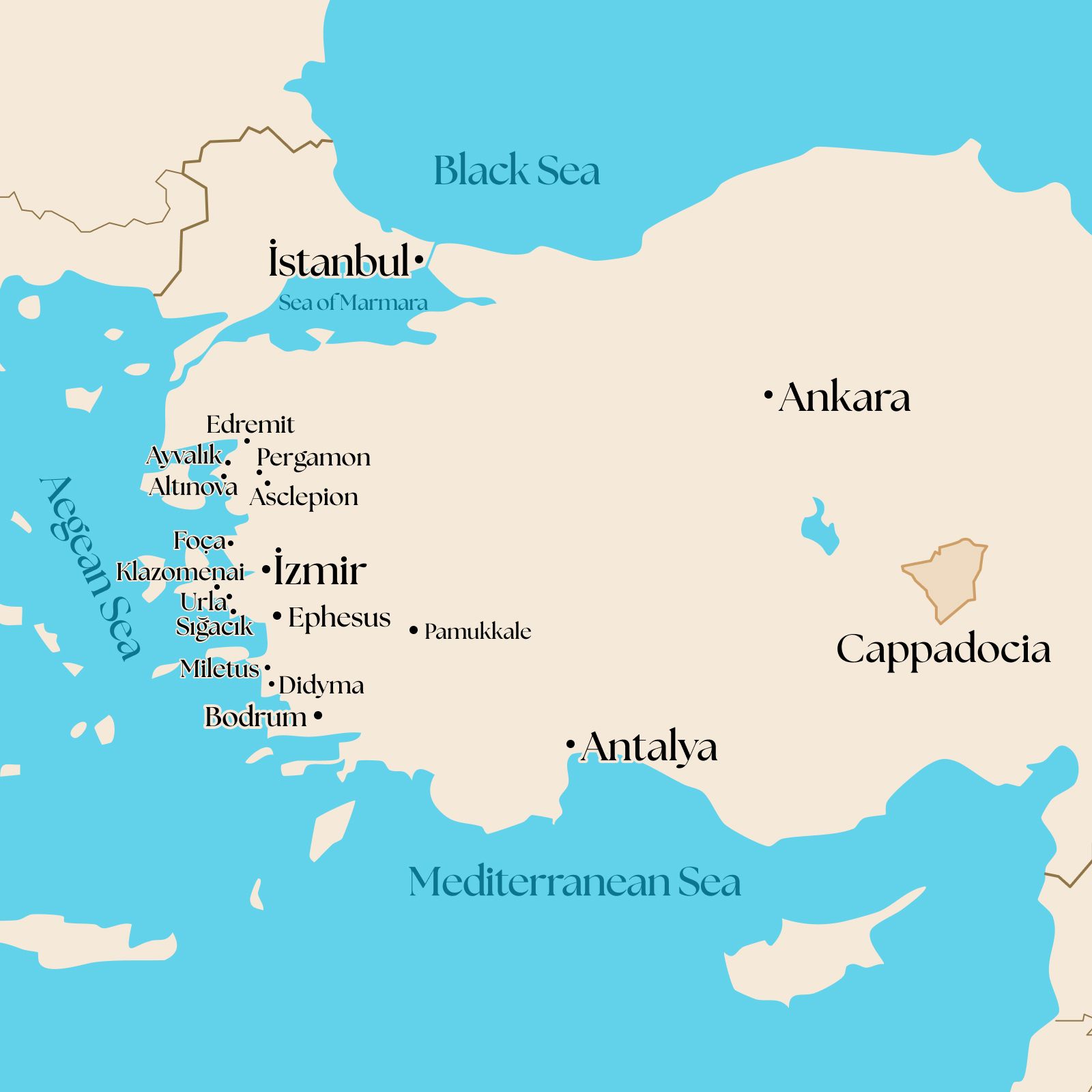
Arrive in Izmir Airport. Meet with your guide and driver and drive to Urla. Visit ancient Klazomenai known for its lively commecial harbor and innovations in olive oil production, and also see the oldest discovered olive oil press from 6th century BCE on the site.
Later on, we will visit an artisanal vineyard where natural wine meets classical amphora techniques. Taste unfiltered reds that taste of iron and thyme and enjoy a gourmet lunch with wine pairing.
In the afternoon, you will visit the shipyard of 360 Historical Research Association, see life-size models of ancient ships, learn how great distances were covered in these unique vessels and the local procuct was distributed over all the Mediterranean coastline.
Dinner in Urla’s old town — a chef’s table featuring the modern Urla Terroir Cuisine, where every course honors one of the region’s five senses.
Sleep in Urla, 2 nights.
Day 2: Seferihisar and Ancient Teos — Taste of Slow Life
After breakfast, you’ll visit the Arkas Art Urla Museum, which is housed in a beautiful, award-winning Roman-style villa. The museum’s diverse collection allows you to explore the history, art, and culture of the Turkish Mediterranean, showing how it interacts elegantly with European culture and how Turkey’s Aegean region has been a meeting point of Mediterranean, European and Ottoman worlds.
Lunch in a mom and pop restaurant in Bademler village, champion of communal farming and ecological living.
Afternoon is dedicated to Sığacık, a peaceful coastal village. The heart of village is the 16th century castle built by Suleiman the Magnificent as a customs outpost which protected the harbor and regulate the maritime trade. You will walk thorugh the picture perfect narrow cobble stone lanes among its walls and awe at beautiful traditional Sığacık homes warepped in bougainvillea.
Then, in the nearby ancient city of Teos visit the agora, theatre, harbor and the grand temple dedicated to Dionysus — a fitting symbol for this fertile, sun-washed landscape where viticulture still thrives.
For dinner, you will be in Seferihisar, the pioneering town of Cittaslow moment in Turkey where traditions are not displayed for tourists but lived naturally.
Day 3: From Urla to Ayvalık — Ancient Wonders and Aegean Flavors
Leave for Ayvalık in the morning and pause at Eski Foça, a charming seaside town where narrow streets, stone houses, and a historic harbor set the scene. Enjoy freshly baked boyoz paired with a cup of Turkish tea as you take in the tranquil coastal rhythm.
Then continue to ancient Pergamum, the storied Hellenistic acropolis perched on a mountain top. Visit the steep theater with panoramic views, explore the Temple of Trajan and the monumental Red Basilica. Sightseeing will contiune in the nearby Asclepion, an ancient healing center powered by herbs, naturei water and music.
For lunch, stop in agrarian Altınova — the Golden Plain — to taste artisanal cheeses and creamy local yogurt, then savor local dishes at a simpe eatery which serves until they run out — a true slice of Aegean daily life.
Before getting into Ayvalık, visit a natural sea salt farm, walk through the salination ponds in the lake among the flamingos who call it home.
In Ayvalık wander cobbled streets or enjoy a leisurely dinner on your own.
Walking: 3–5 miles, moderate.
Bus: 5 hours including stops.
Sleep: Ayvalık.
Day 4: Ayvalık — Turkey’s Seafood and Olive Oil Capital
Begin the day with a guided walking tour through historic Ayvalık, a charming town of narrow cobblestone streets, stone houses, and Ottoman-era mansions. Learn about Ayvalık’s rich history as a bustling port and cultural crossroads, where Greek and Turkish traditions intertwined, creating a unique culinary and architectural heritage.
Next, visit a historic olive oil museum and working press. See century-old stone mills and taste the renowned Ayvalık varietal, golden, floral, and subtly nutty. Your guide reveals the connection between centuries of cultivation and modern Aegean flavors, turning tasting into a story of heritage.
The afternoon is free to explore the town at leisure — wander the bazaar, sip Turkish coffee, or admire seaside views.
In the late afternoon, take a short ferry ride to Cunda Island. Stroll through narrow streets lined with famed stone houses, and visit the Taksiyarhis Church.
Conclude the day with a sumptuous seafod dinner with mezes made with wild mountain herbs, paired with local olive oil and crisp Aegean wines.
Sleep in Ayvalık.
Walking: 3–5 miles. Easy to moderate.
Day 5: Farewell to Aegean Coastling
After a hearty breakfast, we transfer you to Edremit Airport for your onward journey.
What’s included
- All meals and food tasting
- A certified SRM guide
- Private chauffeured vehicle
- Tolls, bridges and parking
- Accommodations in selected hotels
- Admissions
- Fast-track
IN THE KITCHEN
Olive Oil Cooking
Olive oil is the backdone of the Aegean cuisine and defines it. All local dishes are cooked in olive oil. If there is meat or chicken in the dish, it is a main course and served hot. If the dish is vegetarian, it is called an “olive oil dish”, it is a starter — a meze — and served chilled.
Ancient ingredients still in use are
Olive oil (zeytinyağı): backbone of the Aegean cuisine, used both raw and cooked, even for chocholate cake baking.
Spelt (kavılca buğdayı): Ancient Anatolian grain, cultivated since Hittite times for about 4000 years. Used in breads, salads and stuffed vegetables.
Einkorn wheat (siyez buğdayı): one of the earliest domesticated wheats (goes back 10,000 years!). Still used in artisan bread and cracked wheat.
Emmer wheat (karakılçık buğdayı): Ancient grains grown around Urla and Bergama, valued for resilience (can grow without irrigation and under stress). Used for bread, tarhana soup and keşkek.
Barley (arpa): Staple grain. Used in breads, stews, and beer.
Thyme (dağ kekiği): grows wild on the mountains, mentioned in Hippocratic texts. Infusions, meats and cheeses.
Capers (kapari): Common over the coast. Preserved in brine, used in mezes and as garnish.
Mastic (sakız): resin of an evergreen tree. Used for both medicinal purposes and in cooking, even in desserts.
Chickpeas (nohut): common since Stone Age. Used in stews, pilaf and humus.
Fava beans (bakla): grown in coastal plains. Used fresh, dried or pureed. Creates a wonderful delicacsy when matched with artichoke.
Broad beans (bakla): Seasonal staple cooked in olive oil.
Cowpea / bleack-eyed pea: Resilient and thrives in dry, coastal soils. A poor man’s protein.
Sesame (Susam): Used for tahini, breads and various dishes.
Honey (bal): pine and flower honeys, prized since Homeric times. Honey collected from different plants are usually sold in different containers as they are mostly used for medicinal purposes, some examples are Karabaş Out Balı (Lavandula stoechas), Hayıt balı (Vitex Agnus-Castus), Kekik balı (oregano), Yaban kekiği balı (thyme), and others.
Carob (keçiboyunuzu): used as sweetner and flour substitute.
Cheese (peynir): a wide variety of cheeses, both aged and fresh.
Wild Greens
Wild chicory (hindiba): Consumed as meze. Boiled and dressed with olive oil and lemon.
Purslane (semizotu): ancient green, used in salads and yoghurt dishes.
Mallow (ebegümeci): Used in pies, olive oil dishes and salads.
Nettle (ısırgan out): Cooked as soup or sauteed, also an ancient medicine.
Sea fennel (deniz rezenesi): from rocky coasts; pickled or eaten fresh.
Wild artichoke (enginar out): Wild relative of artichoke; cooked with olive oil and lemon.
Salsify (yerelması): root vegetable of Ottoman origin; stewed with lamb or cooked in olive oil.
Cichorium species (radika, turpotu): bitter greens sauteed in olive oil.
Chard (pazı): rolled or stewed.
Musrad greens (hardal out): sauteed with garlic, common in the winter.
Wild Fennel (rezene): Used for medicinal purposes throughout time. Used in sautees and stews. Also an aromatic base for fish dishes and liqueurs.
Oregano (kekik): used as spice, in immersions and for medicinal purposes.
Zahter (one of 60 subspecies of oregano): used as spice and immersions.
Nane (mint): used in seasoning and immersions.
Adaçayı (sage): used in immersions.
Olive leaf (zeytin yaprağı): Used for tea and for medicinal purposes.
Fruits and Vines
Olive (zeytin): the eternal fruit. Food of Gods and Goddesses.
Grapes (üzüm): cultivated for thousands of years, originally from Eastern Anatolia and Caucasus, spread further west to Meditearranean from this region. Two of ancient and indigenous varitals are Foça Karası and Urla Nero. They may be grandparents of well known French or Italian wines.
Fig (incir): Symbol of fertility. Sundried figs of this area has been widely exported since antiquity.
Pomegranate (nar): cultivated since the Bronze Age (for about 400 years). An antioxidant bomb! Used for molasses, salads and sauces. Fresh juice is a prized beverage.
Mulberry (dut): Used for molasses, in desserts and liquors.
Quice (ayva): A winter fruit eaten fresh, cooked with meat or made into dessert.
Almond (badem): Consumed as fresh or dried nut and used in sweets.
Pine nuts (fıstık çamı or dolmalık fıstık): sourcing the 80% of world’s pine nut production, the area is the world capital of pine nuts.
Some signature dishes of this geography
Holy Thistle Stew (Şevketi Bostan): A prized Aegean herb simmered with lamb and olive oil; a rare seasonal delicacy that combines bitterness and creaminess.
Stuffed Artichokes (Enginar Dolması): Whole artichoke filled with rice, pine nuts, and dill — a spring ritual across Urla and Ayvalık.
Sauteed Wild Greens (ot kavurması): A medley of foraged herbs (nettles, purslane, chicory) lightly fried in olive oil.
Stuffed Zucchini Blossoms (Kabak Çiçeği Dolmas): Blossoms filled with herbed rice and olive oil, often prepared at dawn before the flowers close.
Baby Sardines (papalina): Grilled or fried fresh off boats, served with arugula and lemon.
Fresh Curd Dessert (lor tatlısı): Honey syrup soaked soft cheese round pastries, sometimes with lemon zest or mastic.
Stuffed Mussels (midye dolma): Mussels filled with spicy rice and pine nuts, a street delicacy.
Savory herb pastry (ot böreği): Handmade pastry layered with wild herbs and feta, baked in wood-fired ovens.
Okra in Olive Oil or Stewed with Diced Lamb (Zeytinyağlı bamya / etli bamya): Okra stewed slowly in tomato and lemon (with or without diced lamd), embodying the philosophy of zeytinyağlı cooking — simplicity and patience.
Cowpea Salad (Börülce Salatası): Boiled cowpeas are tossed with chopped tomatoes, onions, parsley, and generous olive oil, often finished with lemon juice.
Cowpea Stew (Zeytinyağlı Börülce): Made in summer with tender green pods stewed in olive oil with tomatoes and onions.
Fava (fava): pureed broad beans.
Keşkek (keşkek): heavily beaten ancient wheat and meat stew simmered slowly for hours. A typical wedding dinner dish.
Whole grain fettuncini (kesme erişte): in the lackness of a better word fettucini was used. Erişte is small regtangular shaped hand cut pasta made from whole grain flour. Often served with walnuts and agsed cheese.
Tarhana Soup (tarhana çorbası): yoghurt and whole wheat based preserve made into soup.
Boyoz (boyoz): iconic flaky starchy bun with that came to this region with Jews expelled from Spain. The dough is kneaded, folded, and allowed to rest several times before being baked at high temperature.
Burnt yoghurt (caramelized yoghurt): caramelization is obtained by pouring the cold milk into sizzling hot tinned copper pots to be boiled. When the milk touches the hot copper, the casein in the milk becomes caramelized and creates a burnt flavor.
Desserts
Mastic cookies (sakızlı kurabiye): locals favorite, no tea time is complere without it.
Fig Dessert (incir tatlısı): honey baked figs servied often with walnuts and kaymak (turkish milk cream product similar to clotted cream, composed of about 60% milk fat, milk of buffalo, cow, sheep or goat can be used).
Mastic Ice Cream (Sakızlı Dondurma): Fragrant ice cream with mastic resin, chewy and aromatic.
Pine nut halva (Çam Helvası): simple cooking of pine nuts, honey, sugar and water, resulting in a mouth watering dessert.
Mastic pudding (sakızlı muhallebi): rice starch pudding with mastic.
 Click to Enlarge