The Lycian Coastline — also known as the Turquoise Coast — combines dramatic geography, natural beauty, and a rich cultural heritage, which makes it one of the most captivating destinations in the world.
You can hike or cruise it.
About Lycian Coastline
It is the Greco-Roman name for the region stretching along the Turkish Mediterranean coast. It covers the Teke Peninsula, roughly between the Gulfs of Fethiye and Antalya.
It is the Greco-Roman term for the Lukka people, who spoke Luwian and inhabited the region from the 15th century BC (or earlier) to 546 BC, predating the Greek and Roman presence. Lycians were referred to as Lukka and Luwi in ancient Hittite and Egyptian texts. A powerful naval civilization, they allied with Trojans during the mythical battle and were among the “Sea Peoples” that raided the Egyptian lands.
While Herodotus claimed they came from Crete, archaeological evidence shows they were native to Asia Minor and called themselves Trmmili (or Termilae). A superior culture of its time, they had their own alphabet.
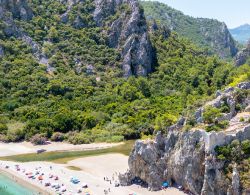
It is the meandering Mediterranean coastline along the shores of ancient Lycia, crowned by majestic Taurus Mountains in the backdrop. The region is known by the distinctive tone of its turquoise sea —hence its designation as the Turquoise Coastline—and by the rich archaeological and cultural legacy of the Lycian civilization.
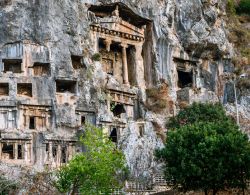
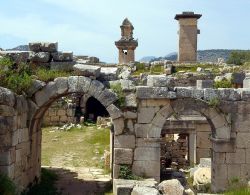
Lycians are remembered for their alphabet, their bravery —marked by the moment they burned themselves alive with their city falling to the Persians rather than living as slaves—, and their monumental tombs. Lycian sarcophagi, easy to recognize with their ogival-shaped (gothic) lids, and rock-cut tombs carved in sheer rock cliffs with facades imitating wooden architecture can be spotted throughout the region, while most of their pillar tombs are in the UNESCO-listed capital city of Xanthos.
Highly unusual for their era, they observed a matrilineal descent.
It is the name of the long-distance trek, ranked among the top ten in the world. With an incredible length of 760 km / 470 miles, trekking it in its entirety takes over a month. Or, travelers can hike it in independent segments.
Stunning scenery, historic towns, archaeological cities, picturesque villages, varied cultural attractions, secluded coves and breathtaking views award both long-distance trekkers and hikers.
With us, you can experience the Lycian Coastline at your own pace—choose an extended expedition, explore it in segments, or cruise its crystal-clear bays on a gulet.